How Heavy Duty Towing Reduces Risk During Industrial Equipment Transport
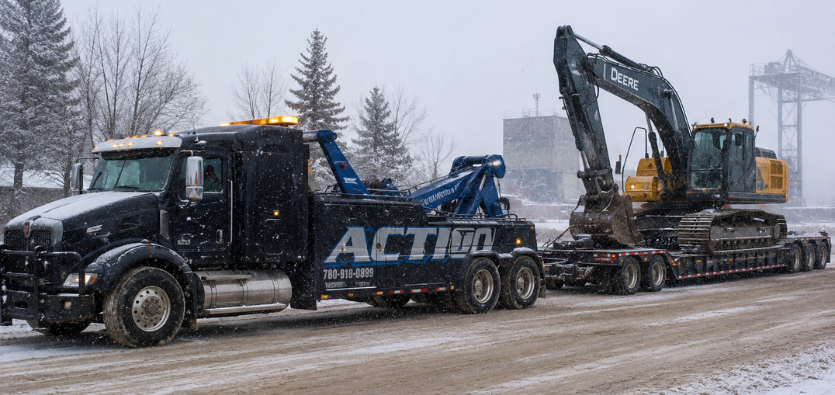
Industrial equipment transport involves serious operational responsibility. Heavy machinery is expensive, difficult to move, and often essential to ongoing commercial projects. A single towing mistake can delay timelines, damage valuable equipment, and create major safety concerns on Alberta roads.
That risk increases when equipment must travel through construction zones, winter highways, industrial corridors, or remote project locations. Businesses cannot afford unreliable transport methods during critical operations.
This is why many companies rely on heavy-duty towing services to support equipment recovery and transport. Professional heavy-duty towing services reduce operational risks through controlled loading procedures, specialized recovery equipment, and experienced operators who understand industrial transport requirements.
For construction firms, fleet operators, and industrial businesses, proper towing support protects equipment, improves safety, and helps projects stay on schedule.
Why Industrial Equipment Transport Requires Specialized Handling
Industrial machinery creates transport challenges that ordinary towing systems cannot safely manage. Equipment such as excavators, loaders, tractors, and commercial trailers places significant stress on transport systems because of their weight and structural design.
Unlike passenger vehicles, industrial equipment often has uneven weight distribution. Hydraulic systems, exposed mechanical components, and oversized dimensions increase the likelihood of transport damage if loading procedures are not carefully managed.
Even small loading mistakes can cause:
- frame stress
- undercarriage damage
- equipment instability
- suspension strain
- hydraulic component failure
Alberta roads create additional transport pressure throughout the year. Winter storms, icy highways, steep grades, and active construction areas all increase the importance of professional recovery support.
The Government of Canada explains cargo securement responsibilities through National Safety Code cargo securement requirements. Proper securement standards help reduce the risk of shifting loads and highway incidents during commercial transport.
Professional heavy-duty towing companies understand how to stabilize industrial machinery safely under changing road and weather conditions.
The Most Common Risks During Industrial Equipment Transport
Load Shifting During Transit
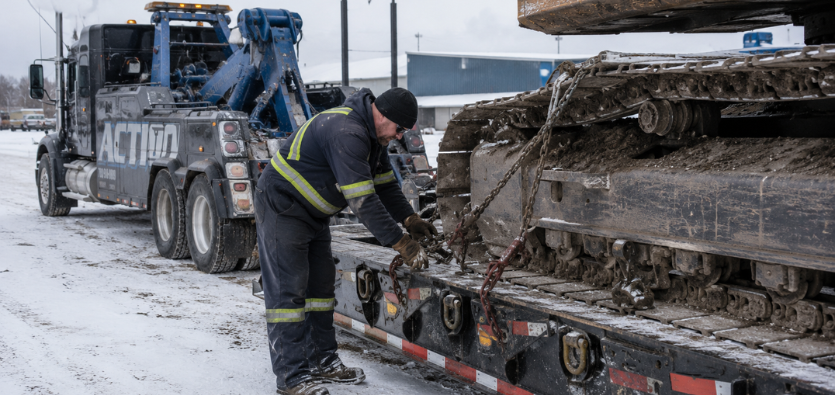
Load shifting remains one of the biggest dangers during industrial equipment transport. Heavy machinery naturally creates balance challenges because equipment weight is rarely distributed evenly.
If equipment moves during braking or cornering, the result can become dangerous very quickly. Trailer instability increases rollover risk and places surrounding drivers in danger.
Professional towing operators use specialized securement systems to stabilize machinery during transport. Proper chain placement, trailer positioning, and weight balancing all help reduce movement during highway travel.
Structural Damage During Loading
Loading and unloading are often the most sensitive stages of industrial transport. Incorrect loading angles can damage undercarriages, tracks, and suspension systems before transport even begins.
This risk becomes greater when equipment operates with low ground clearance or unusual weight distribution. Heavy-duty towing companies reduce these risks through controlled loading procedures and specialized tilt deck equipment.
Tilt deck systems improve loading safety because they create smoother loading angles and better equipment positioning.
Delays Caused by Mechanical Breakdowns
Industrial breakdowns can create immediate operational problems. A disabled excavator, trailer, or commercial vehicle may stop work across an entire project site.
Construction companies and industrial businesses often depend on commercial towing services to restore operations quickly during emergencies.
Fast recovery support helps reduce:
- project delays
- idle labour costs
- missed deliveries
- equipment downtime
- operational disruptions
Reliable towing support becomes especially important for businesses operating across multiple locations.
Liability and Insurance Exposure
Improper towing methods can create major financial complications. Damage during transport may lead to insurance disputes, repair costs, or operational losses.
The Government of Alberta outlines commercial transportation compliance responsibilities through Commercial Transportation Safety and Compliance.
Professional towing companies follow regulated transport procedures designed to reduce liability during industrial recovery operations.
How Heavy Duty Towing Reduces Operational Risk
Specialized Tow Trucks Improve Stability
Heavy-duty towing equipment is built specifically for oversized commercial loads. Standard towing systems cannot safely handle industrial recovery operations involving large machinery or commercial transport vehicles.
Modern heavy-duty fleets often include:
- rotators
- tilt deck trucks
- heavy recovery wreckers
- advanced winching systems
- load transfer equipment
These systems improve transport stability and allow operators to recover machinery more safely during difficult situations.
Tilt deck towing systems are especially valuable for industrial transport because they reduce strain during loading and unloading.
Controlled Loading Procedures Protect Equipment
Professional towing operators follow structured loading procedures before transport begins. Every adjustment affects transport safety.
Experienced operators inspect:
- securement points
- trailer balance
- tire positioning
- axle weight
- route conditions
- equipment height clearance
This preparation reduces the likelihood of shifting loads and transport instability during long-distance hauling.
Careful planning also improves safety during difficult weather conditions and urban transport routes.
Advanced Recovery Equipment Prevents Secondary Damage
Industrial recoveries often involve difficult environments. Equipment may become stuck in mud, snow, ditches, or unstable construction zones.
Improper recovery procedures can create more damage than the original incident itself. Professional heavy-duty towing companies use advanced recovery systems to reduce this risk.
Modern recovery equipment may include:
- rotator systems
- stabilization supports
- controlled extraction winches
- recovery cushions
- hydraulic lifting systems
These tools allow operators to recover industrial machinery with greater precision and control.
Why Fast Recovery Matters for Industrial Businesses
Downtime creates expensive operational pressure for industrial companies. A delayed recovery can affect entire schedules across construction, logistics, or commercial transport operations.
Heavy equipment failures may interrupt:
- material deliveries
- contractor scheduling
- workforce productivity
- project timelines
- fleet operations
Fast towing response helps businesses restore operations before delays spread across multiple projects.
Many industrial businesses now treat towing support as part of their overall operational continuity planning. Reliable recovery partners help companies respond faster during emergencies involving commercial vehicles and equipment transport.
Industries That Depend on Heavy-Duty Towing
Construction and Infrastructure
Construction companies move equipment regularly between active project sites. Excavators, loaders, and compact machinery all require safe transport procedures.
Heavy-duty towing companies help contractors avoid delays caused by disabled or stranded machinery.
Oilfield and Energy Operations
Remote oilfield environments create difficult recovery conditions throughout Alberta. Severe weather, rough terrain, and isolated roads increase transport complexity.
Professional towing companies provide recovery support for heavy industrial operations operating outside urban areas.
Commercial Fleet Operators
Commercial transportation companies depend heavily on reliable roadside support during breakdown situations.
Fleet operators often require:
- trailer recovery
- emergency towing
- heavy truck transport
- roadside assistance
- load transfer services
Reliable towing support helps businesses maintain schedules and reduce costly interruptions.
What Businesses Should Look for in a Heavy Duty Towing Company
Not every towing company has the equipment or experience required for industrial recovery work. Businesses should evaluate towing providers carefully before an emergency happens.
Important factors include:
- Heavy recovery equipment
- Commercial towing experience
- 24-hour availability
- Fully insured operations
- Industrial transport expertise
- Fleet recovery capability
Experienced operators understand how to reduce transport risks while protecting valuable equipment during difficult recovery situations.
Conclusion
Industrial equipment transport involves far more than simply moving machinery between locations. Every transport operation carries operational, financial, and safety risks.
Professional heavy-duty towing helps reduce those risks through controlled loading procedures, specialized recovery equipment, and experienced operators who understand commercial transport demands. Businesses benefit from safer recovery operations, reduced downtime, improved equipment protection, and better operational continuity.
For industrial operations across Edmonton and Alberta, reliable heavy-duty towing remains an essential part of safe and efficient equipment transport.
About Us
Action Towing provides professional heavy-duty towing, roadside assistance, vehicle recovery, and commercial towing support across Edmonton and surrounding Alberta regions. The company supports construction companies, industrial businesses, commercial fleets, and contractors requiring reliable towing and recovery solutions.
Their experienced operators use specialized towing equipment designed for demanding commercial recovery situations. Businesses looking for dependable towing support can directly contact us for assistance.