When Your Business Needs Heavy-Duty Towing, Edmonton Companies Trust
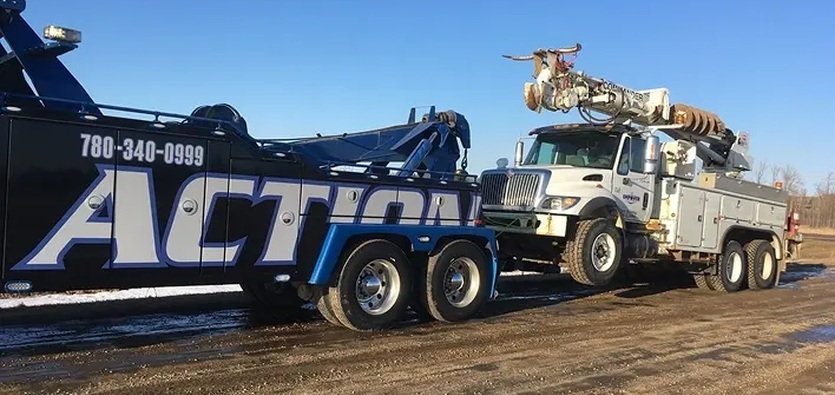
A semi truck stalled on the Yellowhead in January is not the same problem as a sedan with a dead battery on a side street. The stakes are higher, the equipment required is different, and every hour of downtime costs real money. Our team at Action Towing works with fleet managers, construction crews, and independent owner-operators across the Edmonton region who need heavy-duty towing done correctly the first time, because a second attempt usually means a longer delay and a bigger bill.
This article walks through what heavy-duty towing actually involves, the situations where Edmonton businesses tend to need it most, and what separates a properly equipped provider from one that is figuring things out on the fly. It is written for fleet managers, dispatchers, and business owners who want to know what to expect before the next breakdown happens, not after.
What Heavy Duty Towing Edmonton Fleets Rely On Actually Covers
Heavy duty towing is not simply a bigger version of a standard tow. It calls for different trucks, different rigging, and operators who understand load distribution, axle weights, and how a stalled or damaged commercial vehicle behaves under tension. Action Towing handles semi-trucks, motorhomes, buses, tractors, trailers, and construction equipment, each requiring a distinct recovery approach.
A standard tow truck simply is not built for a fully loaded semi or a piece of industrial equipment. The chains, the winch capacity, and the deck size all need to scale up, and so does the operator’s judgment. An operator accustomed to light-duty passenger vehicles lacks the specialized training required to upright a jackknifed trailer on an icy off-ramp, and that gap in experience is exactly where things go wrong for businesses that hire based on price alone.
A jackknifed or overturned trailer may require repositioning or uprighting before it can be moved safely. A rollover often requires winching. A tractor stuck in a muddy field is a different job entirely from a bus that has broken down on Whitemud Drive during rush hour. Our operators assess the situation on arrival and bring the right combination of equipment rather than a one-size-fits-all setup.
Heavy Duty Towing Edmonton: Equipment That Makes the Difference
The right truck matters as much as the operator behind the wheel. Depending on the job, our fleet draws on:
- Heavy wreckers for large-scale recovery work
- Rotator tow trucks for complex or off-angle recoveries
- Winch systems for extraction from ditches, snowbanks, and soft ground
- Tilt-deck carriers for loading equipment and vehicles that cannot be driven
- Wheel-lift systems for faster, lower-impact standard recoveries
Without this range of equipment on hand, a towing provider is limited to whatever job happens to fit its one truck. That is not a position a business wants to be in when a loaded trailer is blocking a lane on Anthony Henday.
Common Heavy Duty Towing Edmonton Scenarios on Alberta Highways
Most calls for heavy duty towing follow a handful of familiar patterns, though the details always vary. Fleet managers and drivers in the Edmonton area most often reach out when:
- A semi truck breaks down on Highway 16, the QEII, or another major route during peak traffic
- A trailer jackknifes on ice or in heavy snow and needs to be straightened before it can be towed
- Construction or agricultural equipment needs to move between a job site and a storage yard
- A commercial vehicle rolls or slides off the road and requires winching before recovery can begin
- An oversized load gets stuck at a weigh station or on a route it was not properly cleared for
Regulations Every Fleet Manager Should Understand
That last scenario points to something worth knowing before it becomes a problem. Alberta sets specific weight and dimension limits for commercial vehicles, and moving anything outside those limits generally requires a permit. The Government of Alberta’s commercial vehicle weight and dimension regulations explain how these limits are set and why they exist, which is useful reading for any business that regularly hauls oversize or heavy loads through the Edmonton area. Understanding these rules ahead of time can prevent a routine trip from turning into a roadside emergency.
What a Reliable Heavy Duty Towing Edmonton Provider Should Offer
Not every towing company is set up to handle a big rig or a piece of heavy machinery, and hiring the wrong one can turn a bad day into a much worse one. A vehicle that is rigged incorrectly during recovery can suffer additional damage, and a provider without the right permits or insurance can leave a business exposed if something goes wrong mid-tow.
Signs You Are Working With an Experienced Crew
Before calling a towing company for a heavy-duty job, it helps to look for a few things:
- Operators trained specifically in heavy vehicle recovery, not just standard towing
- A fleet that includes rotators, heavy wreckers, and tilt-deck carriers, not a single general-purpose truck
- Clear, upfront pricing before the truck is dispatched
- Proper insurance coverage for commercial and heavy vehicle recovery
- Availability around the clock, since breakdowns rarely happen at a convenient hour
Our team built Action Towing around these standards because we have seen what happens when a business trusts an under-equipped provider with a rig worth six figures. The equipment and the experience have to match the job, every time.
Preparing Your Fleet Before You Need a Tow
The businesses that handle breakdowns best are usually the ones that planned ahead. Keeping a towing provider’s number saved, knowing the specifications of your vehicles, and understanding your insurance coverage before an incident happens all shave time off the recovery process. A dispatcher who already knows whether they are sending a rotator or a tilt-deck carrier can get a truck moving faster than one starting from scratch.
It also helps to brief drivers on what information to gather at the scene: their exact location, the nature of the breakdown, and whether the vehicle is blocking traffic. That handful of details lets a dispatcher send the right truck the first time, which matters most when a lane closure or a highway shoulder is involved.
Cost is another factor worth planning around rather than reacting to. Heavy-duty towing rates vary depending on distance, the type of recovery required, and how much rigging or winching is involved. Getting a general sense of these costs ahead of time, and confirming that a provider offers transparent, upfront pricing, makes budgeting easier when an unplanned tow does come up.
Choosing the Right Partner for Heavy Duty Towing in Edmonton
Downtime is expensive, and a poorly handled recovery can make it worse. Whether it is a semi truck stalled on the highway, a jackknifed trailer, or a piece of construction equipment that needs to move between sites, having a dependable towing partner on call changes how quickly your business gets back to work.
Action Towing has spent years building the fleet, training, and dispatch network needed to handle heavy vehicle recovery across Edmonton and the surrounding communities, day or night. If your business needs a towing partner you can count on before the next breakdown happens, contact our team to talk through your fleet’s needs.