Why Trained Operators Make All the Difference for Heavy Equipment Shipping in Edmonton
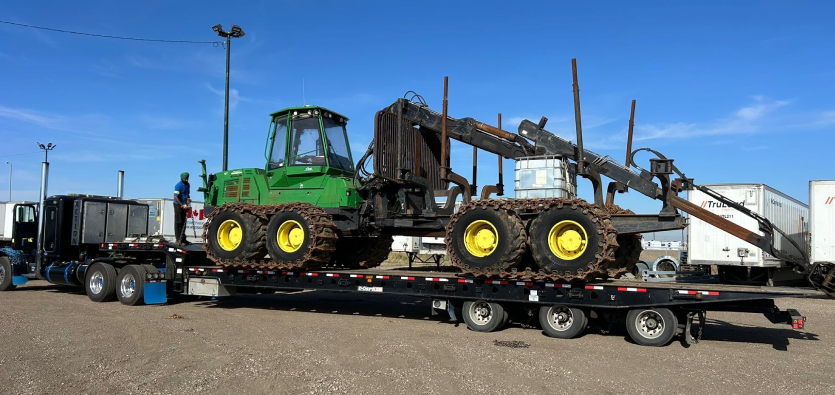
When a construction firm needs to move a bulldozer across Edmonton or an agricultural operation requires a combine harvester delivered to a job site near Sherwood Park, the logistics involved are staggering. Heavy equipment shipping is not merely about having a large truck and a trailer. It is a precise discipline that demands rigorous planning, industrial-grade machinery, and, most critically, trained operators who understand the physics of immense loads.
For a company like Action Towing, the difference between a successful transport and a catastrophic incident on roads like Anthony Henday Drive or Highway 16 often rests solely in the expertise of the personnel handling the controls. While modern rotators and lowboy trailers are essential, they are only as effective as the professionals commanding them.
The Hidden Complexity Behind Moving Massive Machinery
Many people assume that heavy equipment shipping simply involves driving a loader onto a trailer and securing it with chains. In reality, this process is fraught with variables that can shift in an instant. An excavator weighing 45,000 kilograms carries significant kinetic energy. If that weight shifts during transit due to improper securement or a sudden stop, the results can be devastating.
Trained operators approach every shipment as a unique engineering challenge. They perform a structured risk assessment that accounts for:
- The equipment’s centre of gravity
- Route-specific bridge weight limits and overhead clearances
- Prevailing weather conditions, including Edmonton’s deep freezes and wet slush
- Traffic patterns on major corridors like Yellowhead Trail
Why Inexperience Poses a Threat to Public Safety
Untrained personnel often make critical errors that compromise the integrity of the shipment. These mistakes include incorrect weight distribution, failure to identify clearance issues, and inadequate tie-down procedures. Each error carries a direct cost: damaged cargo, torn road surfaces, or, in the worst cases, a load detachment that endangers other motorists.
The Government of Canada’s transportation safety resources consistently highlight that human error remains a leading contributor to commercial vehicle incidents. Specifically, the Cargo Securement Standards under the Motor Vehicle Transport Regulations require that all loads be immobilised and secured using devices that meet federal specifications.
What is a Professional Operator’s Protocol for Heavy Equipment Shipping
A trained professional does not simply show up and hook up. They follow a methodical sequence that guarantees safety and efficiency. For Action Towing, this protocol is the backbone of every heavy equipment shipping job in Edmonton.
Pre-Operation Survey and Route Planning
Before a single chain is attached, the operator completes a full survey of the equipment. They identify vulnerable components such as hydraulic hoses, glass enclosures, and fuel tanks. Simultaneously, they plan a route that avoids low-clearance underpasses, weight-restricted bridges, and residential streets with soft asphalt.
Loading Precision
Trained operators control the ascent speed to avoid sudden jolts. Once the equipment is on the deck, they position it precisely over the trailer’s axles to achieve optimal weight distribution. A load that is too far forward reduces steering control, too far backward unweights the tow vehicle’s drive axles.
Industrial-Grade Securement Strategies
Securing heavy equipment goes beyond wrapping chains around axles. Professionals use a combination of grade-70 transport chains, binder systems, and friction mats. Each chain is tightened to a specific tension, not merely “tight enough.”
Understanding The Difference Between a Trained Operator And an Untrained Operator
| Aspect of Shipping | Trained Operator Approach | Untrained Operator Approach |
| Load assessment | Calculates centre of gravity and weight distribution | Guesses or skips assessment entirely |
| Securement method | Uses grade-70 chains, binders, and calculated tie-down counts | Uses random straps or insufficient chains |
| Route planning | Maps clearances, bridge limits, and traffic patterns | Takes shortest route without verification |
| Emergency response | Executes controlled stop and load re-securement protocol | Panics or makes unsafe manoeuvres |
| Regulatory compliance | Adheres to Transport Canada standards | Risks fines and shipment shutdowns |
Navigating Edmonton’s Urban Corridors and Industrial Zones
Heavy equipment shipping in Edmonton requires intimate local knowledge. The city’s ring road, Anthony Henday Drive, features modern infrastructure but also experiences high traffic volumes. Industrial areas like the Edmonton Energy and Technology Park present unique challenges, including narrow access roads and security checkpoints.
Trained operators understand how to navigate these areas without causing gridlock. They:
- Deploy pilot vehicles when required for oversized loads
- Communicate with local enforcement to ensure permit compliance
- Identify safe entry and exit points for constrained job sites
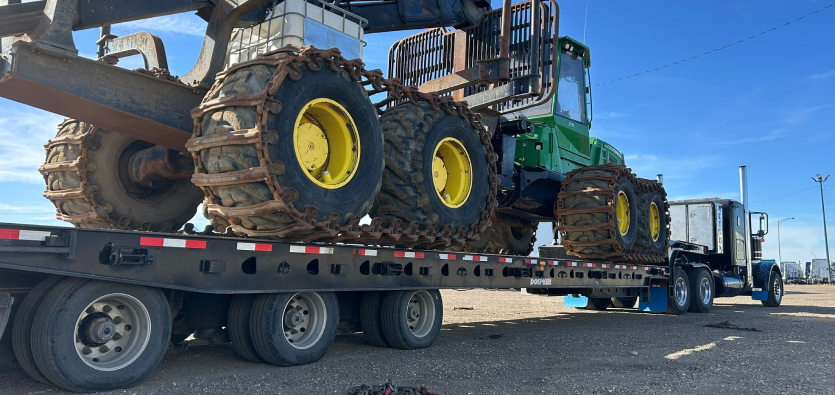
The Economic Case for Hiring Trained Professionals
For businesses in construction, oil and gas, or agriculture, downtime is the enemy. Delays in heavy equipment shipping translate directly into missed deadlines and lost revenue. While hiring a low-cost, inexperienced provider might seem economical, the risks are substantial.
Potential Financial Risks of Inexperience:
- Enforcement Halts: If Alberta Transportation enforcement finds violations, the shipment is halted immediately.
- Fines: Fines and mandatory re-securement fees add unexpected costs.
- Damage: If the load shifts and damages the equipment, repair bills can exceed tens of thousands of dollars.
Trained operators prevent these outcomes through meticulous attention to detail. Additionally, professional operators carry comprehensive insurance that specifically covers heavy equipment shipping, reducing liability risks for the client.
Conclusion
Heavy equipment shipping in Edmonton is a task that demands respect for physics, law, and public safety. The difference between a smooth delivery and a roadside disaster is not the size of the truck, it is the skill of the operator behind it.
Trained professionals bring situational awareness, technical knowledge, and a safety-first mindset that protects your machinery, your timeline, and your reputation. When you choose a provider like Action Towing, you are hiring a specialist who treats your equipment with the same care as their own. For any business moving heavy machinery in the Edmonton region, entrusting the job to trained operators is not an expense, it is an investment in operational excellence. For professional services, contact us today and get the best towing services in Edmonton