Heavy-Duty Towing in Tight Industrial Yards: Planning Access for Disabled Trucks and Trailers
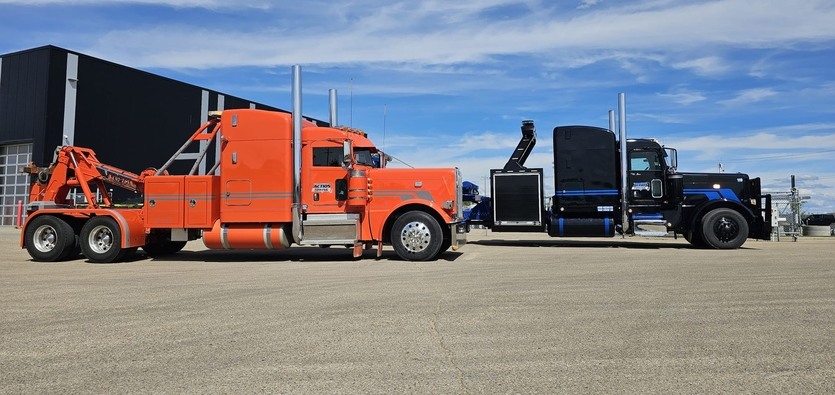
A disabled semi-truck in a crowded industrial yard can be difficult to recover, especially when loading docks, parked trailers and narrow access lanes leave little room for heavy recovery equipment. During Edmonton's winter months, snowbanks and icy pavement can make the situation worse. At Action Towing, we provide heavy-duty towing in Edmonton for commercial trucks and trailers that require specialized equipment and careful recovery planning.
Before recovery begins, fleet managers need to confirm where the disabled vehicle is positioned, what is blocking access and whether there is enough room for a heavy-duty tow truck to approach safely.
A truck parked between two trailers may require a different recovery plan than one stopped across an open loading lane. Our team uses the information provided by drivers and site managers to assess equipment requirements, access restrictions and potential hazards.
This guide explains what commercial fleet operators should check before requesting heavy-duty towing in a tight industrial yard.
Why Heavy-Duty Towing in Industrial Yards Requires Access Planning
Industrial yards are designed for regular truck movements, deliveries and loading operations. However, a disabled vehicle can change how the entire site functions.
A truck that cannot move under its own power may be blocking a loading dock, trailer parking space or main access route. Other vehicles may still be operating nearby.
Heavy-duty recovery equipment also needs space to approach the disabled vehicle, establish a suitable towing or recovery position and leave the site.
Common access challenges include:
- Narrow lanes between parked commercial trailers
- Loading docks with limited turning space
- Shipping containers and equipment stored near access routes
- Low overhead pipes, building structures or electrical lines
- Snowbanks reducing the usable width of yard entrances
- Icy pavement or uneven surfaces affecting equipment positioning
- Other trucks waiting to enter or leave the property
Fleet managers should not assume that a recovery truck can follow the same route used by a working tractor-trailer.
The recovery vehicle may have different clearance needs, especially once it is connected to the disabled truck or trailer.
What Should Fleet Managers Check Before Requesting Heavy-Duty Towing?
The first step is to understand the disabled vehicle's location and condition.
Fleet managers do not need to determine the recovery method themselves. They should collect accurate details that allow the towing company to evaluate the job.
Identify the Disabled Truck or Trailer
Start with the basic vehicle information.
Dispatch should know:
- Whether the disabled unit is a straight truck, semi-truck, tractor-trailer combination or detached trailer
- Vehicle make, model and unit number, if available
- Approximate vehicle length and configuration
- Whether the trailer is attached to the tractor
- Whether the truck or trailer is loaded, partially loaded or empty
- Known gross vehicle or combination weight
- Whether the steering, brakes, axles or suspension are damaged
- Whether the vehicle can roll safely or has locked wheels
A truck with a mechanical breakdown may require different handling from one with damaged suspension or a seized axle.
If the vehicle cannot move because of a brake or transmission problem, tell dispatch what the driver has observed.
Do not attempt to diagnose the fault by forcing the vehicle to move.
Confirm the Truck's Exact Position
Knowing the street address is not enough when the property contains several buildings, gates and loading areas.
Describe the truck's position within the site.
For example, the vehicle may be:
- Parked against a loading dock
- Stopped between two rows of trailers
- Blocking the main shipping entrance
- Positioned near a warehouse wall
- Stuck on an icy incline
- Disabled inside a fenced equipment yard
Include the nearest dock number, building entrance or recognizable landmark.
This helps recovery operators locate the unit without driving through unsuitable sections of the property.
How Much Space Does a Heavy-Duty Tow Truck Need?
There is no single clearance measurement that works for every heavy-duty towing operation.
The required space depends on the recovery truck, disabled vehicle, towing configuration and available approach angles.
A heavy wrecker may need sufficient room to position near the disabled truck and connect appropriate recovery equipment.
If the vehicle must be winched or repositioned before towing, the operator may need additional working space.
Check the Available Turning and Manoeuvring Area
Fleet managers should identify obstacles that could prevent the recovery vehicle from entering, turning or exiting.
Important measurements and observations include:
- Width of the yard entrance and internal access lanes
- Clearance between parked trailers
- Available turning space at lane intersections
- Distance between the disabled vehicle and nearby structures
- Height restrictions from overhead equipment
- Clearance near loading dock doors
- Whether a recovery vehicle can leave without reversing through active traffic
Approximate measurements are useful, but they should be identified as estimates.
If the site has an existing yard map, provide it to dispatch.
Photos showing the full approach route can also help operators understand the available space.
Check the Exit Route Before Moving Anything
Getting recovery equipment into the yard is only part of the job.
The recovery team also needs a suitable route out with the disabled truck or trailer.
A route that accommodates an empty recovery truck may not provide enough clearance once a commercial vehicle is attached.
Fleet managers should confirm whether the exit contains sharp turns, narrow gates, steep ramps or other restrictions.
The recovery operator must determine whether the proposed route is suitable for the equipment and towing arrangement.
Why Winter Conditions Make Industrial Yard Recovery More Difficult
Winter maintenance plays an important role in heavy-duty towing across Edmonton.
A yard that normally has enough room for commercial vehicles may become difficult to navigate when snow accumulates along the edges of driving lanes.
Ice can also reduce traction during positioning and recovery.
Identify Snowbanks and Hidden Obstacles
Snowbanks can conceal curbs, concrete barriers, drainage structures and other fixed obstacles.
Fleet managers should report where snow has accumulated and whether it reduces the usable driving area.
Pay particular attention to:
- Snow piled beside loading docks
- Narrowed entrances and security gates
- Ice buildup around the disabled truck
- Snow-covered parking blocks or curbs
- Frozen ruts in gravel yards
- Uneven ground hidden beneath fresh snowfall
Do not assume that snow-covered areas can safely support heavy recovery equipment.
If snow removal is necessary, the recovery operator and site supervisor should agree on which areas need clearing.
Report Ice and Surface Conditions
A heavy tow truck needs suitable ground conditions for controlled positioning and movement.
On icy pavement, the operator may need to consider additional traction precautions or a different equipment position.
If the yard has been sanded or cleared, tell dispatch which areas have received attention.
Avoid spreading material, repositioning equipment or disturbing an unstable vehicle without coordinating with the recovery team.
How Should Industrial Yard Traffic Be Managed During Recovery?
A disabled truck can interrupt deliveries, shipping schedules and employee vehicle movements.
However, maintaining normal traffic around an active recovery operation may create unnecessary risks.
Fleet managers should establish a temporary traffic arrangement before heavy recovery equipment enters the work area.
Separate Recovery Work From Active Yard Operations
A site supervisor should identify which lanes, docks or parking areas need to remain unavailable during recovery.
Depending on the location, this may involve:
- Temporarily closing the affected loading dock
- Redirecting incoming delivery trucks
- Moving parked trailers when it is safe and practical
- Restricting employee vehicles from the recovery area
- Establishing a separate pedestrian route
- Assigning a site representative to coordinate access
- Informing warehouse staff about temporary changes
The Government of Alberta provides occupational health and safety resources covering workplace safety requirements and responsibilities. Employers and supervisors should consider applicable workplace hazards when coordinating vehicle movements and recovery activities.
Keep Workers Away From Recovery Equipment
Heavy-duty towing may involve cables, lifting equipment, winches and substantial vehicle loads.
People who are not involved in the operation should remain outside the designated recovery area.
Site staff should not attempt to guide a disabled truck by standing between vehicles or near recovery equipment.
Any required signalling or vehicle movement assistance should be coordinated with the recovery operator through an agreed communication procedure.
What Should Dispatch Know About Loading Docks and Yard Layout?
Many industrial recovery calls involve vehicles positioned near loading docks.
A disabled tractor may remain connected to a trailer backed into a dock. In other situations, a detached trailer may have damaged landing gear or blocked wheels.
Both situations require accurate information before recovery begins.
Report Dock and Trailer Restrictions
Fleet managers should confirm:
- Whether the trailer is still connected to the loading dock
- Whether dock restraints or wheel chocks are engaged
- Whether loading equipment is inside the trailer
- Whether freight is still being loaded or unloaded
- Whether the trailer's landing gear is supporting weight
- Whether the dock leveller or other equipment could interfere with movement
- Whether another vehicle blocks access to the tractor
Do not release dock restraints, remove wheel chocks or reposition a questionable trailer simply to create more room.
Any necessary changes should be coordinated with qualified personnel after the vehicle's stability has been assessed.
Provide a Yard Map When Available
Larger distribution centres may have internal traffic plans showing entrances, trailer parking areas and loading docks.
Sharing this information can help dispatch understand site restrictions before the recovery truck arrives.
A useful map should identify the disabled vehicle's position, possible access routes and known obstacles.
Action Towing provides heavy-duty towing and recovery support for commercial vehicles in Edmonton and nearby communities. Early information about site layout helps our team assess the equipment and access requirements of each recovery request.
How Does the Truck's Load Affect Recovery Planning?
The condition and weight of the disabled vehicle influence the recovery approach.
A loaded semi-trailer may present different challenges from an empty tractor.
Fleet managers should provide available weight information and report any concerns about cargo stability.
Confirm the Vehicle and Cargo Weight
Useful records include shipping documents, scale tickets and trailer specifications.
Dispatch may need to know:
- Approximate gross combination weight
- Weight of the trailer and its cargo
- Type of freight being transported
- Whether cargo is distributed evenly
- Whether the load has shifted
- Whether dangerous goods are involved
If the exact weight is unknown, provide an estimate and explain its source.
Do not assume that a trailer can be moved safely because it has not visibly shifted.
Report Damage That Could Affect Movement
Damaged wheels, suspension components, axles or structural parts can complicate recovery.
The driver should observe from a safe location and report visible issues.
A trailer leaning toward one side, for example, may require additional assessment before it can be repositioned.
Cargo securement may also need inspection before the vehicle returns to the road.
What Should Drivers Avoid While Waiting for Heavy-Duty Recovery?
A disabled vehicle in a tight industrial yard can create pressure to clear the area quickly.
Drivers should not attempt risky movements to reopen a shipping lane or free a loading dock.
Until the recovery team arrives:
- Do not repeatedly attempt to drive a vehicle with suspected brake, steering or axle damage.
- Do not use forklifts or other yard machinery to push a disabled truck.
- Do not disconnect a trailer if its support and stability are uncertain.
- Do not crawl beneath the vehicle to inspect damaged components.
- Do not move cargo without proper authorization and a safe handling plan.
- Do not allow other vehicles to squeeze past an unstable truck.
- Do not attempt improvised winching or towing.
The driver should follow company safety procedures, secure the vehicle against unintended movement where safe to do so and inform site management about the obstruction.
If the vehicle creates an immediate danger to workers or other traffic, the site should implement its emergency procedures.
How Do Heavy-Duty Towing Operators Plan a Recovery in a Confined Yard?
Once the recovery team arrives, operators assess the disabled vehicle and surrounding work area.
They consider the vehicle's weight, mechanical condition, available clearance and ground conditions before choosing a recovery method.
Assess Equipment Positioning
The operator determines whether the recovery truck can approach the disabled vehicle from a suitable direction.
Some incidents may require a vehicle to be repositioned before it can be connected for towing.
Others may involve controlled winching or specialized lifting equipment.
The appropriate approach depends on the conditions at the scene.
No single method is suitable for every industrial yard.
Confirm the Route Out of the Property
Before moving the disabled unit, the recovery team assesses the planned exit route.
This includes turns, overhead clearances, pavement conditions and nearby obstacles.
If the selected route is unsuitable, another approach may be required.
Site managers should remain available to coordinate temporary access changes.
How Can Fleet Managers Prepare Industrial Yards for Winter Towing Incidents?
Industrial businesses can reduce recovery access problems by maintaining clear routes and keeping accurate site information available.
Practical preparations include:
- Keeping emergency access routes free of unnecessary storage
- Identifying suitable areas for temporarily parking trailers
- Maintaining winter snow clearing around entrances and turning areas
- Recording gate widths and overhead clearance restrictions
- Keeping current yard maps available to fleet dispatchers
- Establishing procedures for restricting traffic around disabled vehicles
- Making trailer and vehicle weight records accessible
- Identifying who can authorize temporary yard closures
These measures do not eliminate breakdowns, but they can make recovery coordination more straightforward.
At Action Towing, we understand that a disabled commercial vehicle can affect warehouse operations, deliveries and fleet schedules. Providing clear access details allows our professionals to assess the situation before selecting a recovery approach.
Conclusion
Heavy-duty towing in a tight industrial yard requires more planning than simply sending a recovery truck to the address.
Fleet managers should confirm the disabled vehicle's condition, available working space, yard entrance restrictions, winter surface conditions and proposed exit route before recovery begins.
Accurate information helps recovery operators assess the job while allowing site managers to make appropriate arrangements for workers, loading docks and other vehicles.
Action Towing provides heavy-duty towing and commercial truck recovery services in Edmonton and surrounding areas. If a disabled truck or trailer is blocking your industrial yard, contact our team or call 780-340-0999 to discuss the vehicle's condition, site access and recovery requirements.