Dropped Trailer Recovery in Edmonton: What Fleet Managers Should Report About Landing Gear and Load Status
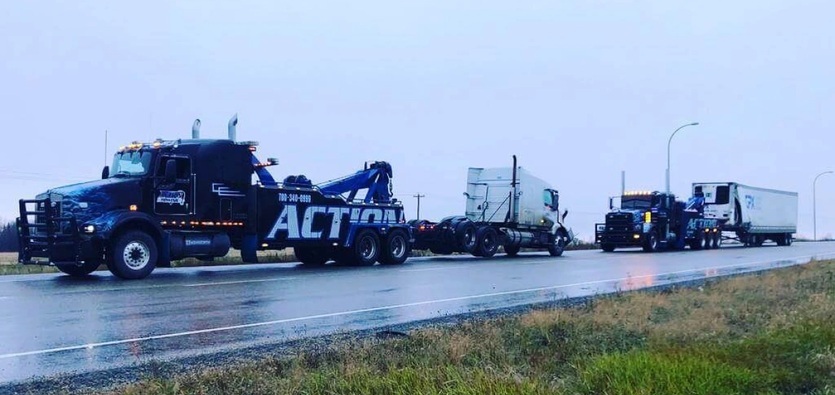
A loaded semi-trailer that drops during parking or uncoupling can put the landing gear, trailer frame and cargo at risk. In winter, snow-covered ground and frozen surfaces can make recovery more difficult. At Action Towing, we provide heavy-duty towing services in Edmonton for commercial vehicles, including trailer recovery and load-related incidents.
For fleet managers, the first priority is to establish what happened and whether the trailer is stable. A trailer resting on damaged landing gear needs a different recovery plan than one sitting on its frame with a shifted load.
Before dispatching recovery equipment, we need reliable details about the landing gear, trailer weight, cargo and surrounding ground conditions. This guide explains what fleet managers should report, what drivers should avoid and how to prepare for safe winter recovery.
Why Dropped Trailer Recovery in Edmonton Requires Careful Planning
A dropped trailer is a semi-trailer that has lost its intended support during uncoupling, parking or another incident. It may have fallen from the tractor’s fifth wheel, settled into soft ground or suffered landing gear failure.
The trailer may appear stable even when its weight is resting on damaged components or uneven ground.
Common causes and contributing factors include:
- Landing gear failure: One or both landing gear legs bend, collapse or lose support.
- Uncoupling problems: The trailer loses tractor support before its landing gear can safely carry the front-end weight.
- Uneven surfaces: One landing gear foot rests lower than the other, causing the trailer to lean.
- Soft or unstable ground: The landing gear feet sink into gravel, thawing soil or an unsupported surface.
- Winter conditions: Snow hides depressions, while ice reduces traction and makes equipment positioning harder.
- Load distribution: Heavy or unevenly distributed cargo changes the forces acting on the trailer.
For commercial fleets, attempting to lift or reconnect a trailer without understanding these conditions can increase damage and delay recovery.
Our team considers the trailer’s position, reported load status and site access before determining what recovery equipment may be appropriate.
What Should Fleet Managers Report About the Landing Gear?
Landing gear condition is one of the most important details during a dropped trailer recovery call.
The landing gear supports the front of a semi-trailer when it is disconnected from the tractor. If it collapses, bends or sinks into the ground, the trailer may no longer have reliable front support.
Describe the Landing Gear Position
Ask the driver to observe the landing gear from a safe distance.
Useful details include:
- Are both landing gear legs still upright?
- Has one leg collapsed or bent sideways?
- Are the landing gear feet touching the ground evenly?
- Has either foot sunk into snow, gravel or soft soil?
- Is the trailer leaning toward one side?
- Is the crank handle or gearbox visibly damaged?
- Is the front of the trailer resting on the frame or another component?
Fleet managers should report visible conditions rather than assume the exact cause of the failure.
For example, saying that the roadside landing gear leg has folded beneath the trailer is more useful than simply reporting broken landing gear.
Explain Whether the Landing Gear Can Still Support Weight
A damaged landing gear assembly may look intact but no longer be capable of supporting the trailer.
Drivers should not test questionable landing gear by repeatedly operating the crank or attempting to reposition the trailer.
Instead, confirm whether the trailer appears to be supported by both legs, one leg or another surface.
If the driver cannot determine this safely, tell dispatch that the support condition is unknown.
This information helps recovery operators evaluate the need for stabilization and controlled lifting.
How Does Trailer Load Status Affect Heavy-Duty Recovery?
A loaded trailer presents different recovery considerations than an empty one. Its total weight, cargo distribution and possible load movement can affect lifting requirements and equipment selection.
Fleet managers should identify the cargo and confirm the most reliable weight information available.
Report Whether the Trailer Is Loaded, Partially Loaded or Empty
Start with the current load status.
A useful report should include:
- Trailer type, such as dry van, refrigerated trailer, flatbed or container chassis
- Whether the trailer is empty, partially loaded or fully loaded
- Estimated gross trailer weight, if known
- Cargo weight from shipping documents or scale tickets
- Cargo type and approximate distribution
- Whether any cargo has moved, fallen or become unsecured
- Whether dangerous goods or temperature-sensitive freight are involved
Do not confuse cargo weight with total trailer weight. The weight of the trailer itself also matters when planning recovery.
If the exact weight is unavailable, tell dispatch which figures are estimates.
Identify Signs of Load Shifting
An abrupt drop can cause cargo to move inside a trailer.
This is particularly important when freight is stacked, palletized or concentrated near one end.
Potential warning signs include:
- The trailer is leaning more than expected.
- Cargo has visibly shifted on an open trailer.
- Internal movement or impact was reported during the drop.
- Trailer doors, walls or structural components appear distorted.
- The driver reports damaged restraints or displaced freight.
Do not ask a driver to open trailer doors when displaced cargo may be pressing against them.
A dropped trailer may already be unstable. Opening doors or entering the trailer without a proper assessment can create additional hazards.
Fleet managers should arrange for qualified personnel to assess questionable cargo conditions before loading, lifting or transport decisions are made.
Why Winter Ground Conditions Matter During Trailer Recovery
Edmonton winters create additional challenges for heavy-duty towing and commercial trailer recovery.
Landing gear feet may be resting on compacted snow, ice or ground that has frozen unevenly. The surface can appear firm while concealing weak support or depressions.
Check Snow, Ice and Ground Support
Before requesting recovery equipment, ask the driver or site supervisor to describe the location.
Important details include:
- Whether the trailer is on pavement, gravel or an unpaved yard
- The approximate depth of snow around the landing gear
- Visible ice beneath the trailer or around its wheels
- Whether landing gear feet have sunk into the surface
- Any slope or uneven ground near the trailer
- Whether the trailer wheels are properly secured against unintended movement
- Space available for heavy recovery equipment
A trailer parked in an open industrial yard may allow easier equipment access than one positioned between loading docks.
However, an open yard does not automatically provide suitable ground support for heavy lifting equipment.
Report Whether the Site Has Been Cleared
Snow removal can improve access, but it should not disturb an unstable trailer.
Let dispatch know whether the approach has been plowed, where snowbanks are located and whether the surface has been sanded.
Avoid moving snow, placing equipment or changing the surface beneath a damaged trailer until the recovery team has assessed the situation.
Action Towing provides heavy-duty recovery services for commercial operators in Edmonton and surrounding communities. Accurate winter site details help our operators evaluate access and recovery requirements before work begins.
What Should Fleet Managers Know About Cargo Securement?
Trailer recovery involves more than lifting the front of a trailer. Cargo must also be considered before the unit is moved.
Even when freight has not visibly shifted, the incident may have affected its restraints or distribution.
The Government of Alberta’s Education Manual for Commercial Carriers includes guidance on cargo securement, commercial vehicle safety, weights and dimensions. These requirements remain relevant when planning the safe movement of commercial freight.
Confirm the Condition of Cargo Restraints
Fleet managers should determine whether the driver has observed damaged straps, chains, load bars or other securing equipment.
They should also confirm whether the trailer was sealed before the incident and whether any cargo inspection has been completed.
If dangerous goods are involved, report the relevant shipping information and any suspected leak or release immediately. Emergency responders may be required before recovery work can proceed.
The recovery team must know about potential cargo hazards before approaching the trailer.
Decide Whether Freight Needs Separate Handling
Some incidents may require cargo to be stabilized, transferred or partially unloaded before the trailer can be recovered.
That decision depends on the trailer’s condition, weight distribution and available recovery methods.
A fleet manager should not assume that removing freight is always necessary. In some situations, opening or unloading an unstable trailer may create additional risks.
The appropriate method should be determined by qualified recovery personnel working with the carrier and, where needed, cargo-handling specialists.
What Information Helps Dispatch Plan Dropped Trailer Recovery in Edmonton?
A detailed dispatch report allows recovery operators to understand the incident before arriving.
Fleet managers do not need to diagnose mechanical failures. They need to provide accurate observations and supporting records.
Prepare These Details Before Calling
Use the following checklist:
- Location: Exact address, yard entrance, highway location or nearby landmark.
- Trailer identification: Unit number, trailer type and approximate length.
- Incident: Whether the trailer dropped during uncoupling, parking or another operation.
- Landing gear: Visible damage, leg position and current support conditions.
- Load: Cargo type, load status and known or estimated weight.
- Trailer position: Whether the trailer is level, leaning or resting on its frame.
- Surface conditions: Ice, snow, slope, gravel, pavement or soft ground.
- Access: Gate restrictions, parked equipment, overhead clearances and available working space.
- Safety concerns: Leaks, damaged cargo, traffic exposure or nearby personnel.
- Destination: Whether the trailer may need movement to a repair facility, secured yard or another approved location.
Photos taken from a safe position may also help dispatch understand the trailer’s condition.
Example of a Useful Recovery Request
A fleet manager might report:
“Our loaded 53-foot dry van dropped during uncoupling at our Edmonton distribution yard. The driver reports that the passenger-side landing gear leg is bent and the front of the trailer is leaning. We have a recent scale ticket, but the cargo condition has not been checked. The trailer is on icy pavement, with access through the east yard gate. We need a heavy-duty recovery assessment before attempting to move it.”
This gives dispatch a clearer picture of the problem without making assumptions about how the trailer should be lifted.
What Should Drivers Avoid Before the Recovery Team Arrives?
An unstable trailer should not be treated like a routine coupling problem.
The driver should stop further movement and keep people away from the affected area.
Until qualified personnel assess the trailer:
- Do not attempt to raise it using improvised lifting equipment.
- Do not crawl beneath the trailer to inspect the landing gear.
- Do not try to force the tractor back underneath it.
- Do not crank damaged landing gear to test whether it still works.
- Do not open cargo doors if freight may have shifted against them.
- Do not reposition the load or remove restraints without authorization.
- Do not allow other vehicles or workers into the immediate hazard area.
If the trailer is near active traffic, the driver should follow the carrier’s emergency procedures and request appropriate assistance.
If there is a suspected hazardous material release, keep clear and contact emergency services.
A recovery operator may also request that certain areas remain closed until the trailer is stabilized.
How Do Heavy-Duty Recovery Operators Assess a Dropped Trailer?
Once on site, recovery personnel assess the trailer’s position and identify a controlled recovery approach.
The process may involve examining visible landing gear damage, estimating the weight involved and determining suitable equipment positions.
Depending on the circumstances, a recovery operation may require heavy wreckers, lifting equipment, winch systems or additional stabilization.
Stabilization Comes Before Movement
The objective is to prevent uncontrolled movement while the trailer is being recovered.
Operators consider whether the trailer needs temporary support before lifting or whether damaged components could interfere with the recovery.
They must also account for ground-bearing conditions and the space required for recovery equipment.
A trailer with collapsed landing gear may need specialized support before a tractor can safely reconnect.
Recovery Does Not Automatically Mean the Trailer Is Roadworthy
Getting a trailer upright does not confirm that it is safe for transport.
The landing gear, frame, kingpin area, suspension, brakes and cargo securement may require inspection before the unit returns to service.
Fleet managers should coordinate any necessary mechanical assessment or repairs and obtain appropriate clearance for further movement.
For commercial carriers, preventing a second incident is more important than rushing the trailer back into operation.
How Can Fleet Managers Reduce Winter Trailer Recovery Delays?
Some preparation can make recovery coordination easier without putting drivers at risk.
Keep current trailer information available, including unit identification, equipment specifications and maintenance records.
Make sure dispatch personnel can access cargo documents and contact the person responsible for the load.
During winter, confirm that yard entrances, access routes and designated trailer parking areas are maintained.
Drivers should also be trained to report damaged landing gear, uneven parking surfaces and signs of trailer instability.
At Action Towing, we work with commercial fleets that need heavy-duty towing and recovery support. Clear communication between fleet managers, drivers and recovery operators helps everyone understand the work required before the trailer is moved.
Conclusion
A dropped trailer can create serious risks when landing gear is damaged, freight has shifted, or winter ground conditions are uncertain. Fleet managers should report the trailer’s position, landing gear condition, cargo weight, load status and site access before recovery begins.
The more accurate the initial information, the better the recovery team can assess the situation and prepare the appropriate equipment.
Action Towing provides heavy-duty towing and commercial vehicle recovery services in Edmonton and surrounding areas. If your fleet has a dropped or unstable trailer, contact our team or call 780-340-0999 to explain the situation and request recovery assistance.