How to Tow an All-Wheel Drive (AWD) Car Safely in Edmonton
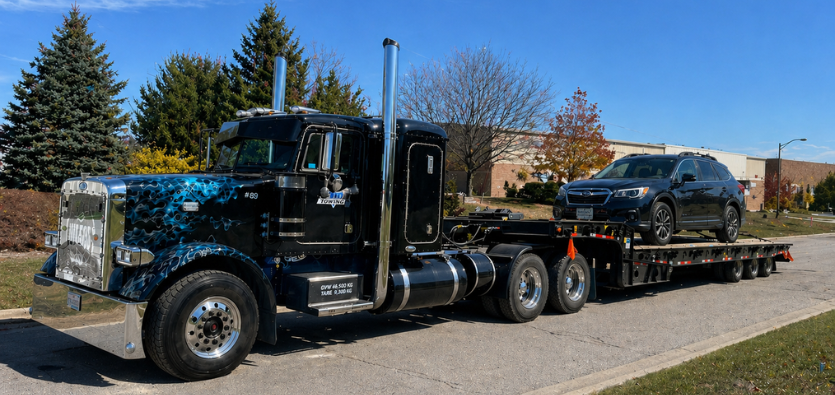
Towing an all-wheel drive vehicle requires a precise understanding of drivetrain mechanics and proper towing procedures. Unlike front-wheel or rear-wheel drive systems, AWD vehicles rely on a connected drivetrain system, including the transmission, transfer case, driveshaft, and differentials.
AWD towing requires controlling drivetrain engagement, as uncontrolled wheel rotation can create rolling resistance and disrupt internal lubrication cycles within the transmission and transfer case.
Improper towing can result in immediate mechanical damage, often within a short distance. This guide explains safe towing methods, risks, and best practices based on real-world towing experience.
Can You Tow an AWD Car
AWD cars can be towed safely only when all four wheels are prevented from rotating, typically using a flatbed tow truck. Understanding the correct approach to towing AWD vehicles is essential before any movement.
Yes, AWD vehicles can be towed, but only when the method prevents wheel rotation and drivetrain engagement. Since all four wheels are mechanically linked, even minor movement can activate internal components.
In AWD systems, even minor axle rotation can transfer force through the driveshaft and differential, causing internal components to move without proper lubrication.
Key Takeaways
- AWD systems distribute torque across all wheels
- Drivetrain remains partially engaged even when the engine is off
- Safe towing requires full isolation of wheel movement
Flatbed towing is the most reliable and widely accepted method.
Can You Tow an AWD Car with Two Wheels on the Ground
No, towing an AWD car with two wheels on the ground can cause immediate drivetrain damage due to uncontrolled axle rotation. When two wheels remain on the ground, they continue to rotate, causing internal drivetrain components to operate without proper lubrication.
What Happens Mechanically
- Driveshaft continues rotating
- Differential remains engaged
- Transmission experiences friction without lubrication
This uncontrolled rotation creates drivetrain stress by forcing the transmission and transfer case to operate without active fluid circulation, increasing the risk of overheating.
Result
- Overheating
- Gear wear
- Internal damage within minutes
This method should be avoided unless explicitly approved by the manufacturer.
Why AWD Vehicles Are Difficult to Tow
AWD vehicles are difficult to tow because all four wheels are mechanically connected through the drivetrain, making uncontrolled movement risky.
Core Components Involved
| Component | Function |
| Transmission | Transfers engine power |
| Transfer Case | Distributes torque between axles |
| Driveshaft | Connects drivetrain components |
| Differentials | Allow wheel speed variation |
| Axles | Transfer power to wheels |
Because AWD systems rely on synchronized gear movement, any imbalance in wheel rotation can lead to gear misalignment and increased internal friction. When towing is performed incorrectly, these components operate under stress without proper lubrication cycles.
What Happens If You Tow an AWD Car Incorrectly
Improper towing of an AWD car can lead to transmission failure, transfer case damage, and overheating within a short distance.
Common Mistakes
- Using wheel-lift towing
- Towing with two wheels on the ground
- Ignoring manufacturer guidelines
Mechanical Consequences
| Issue | Impact |
| Transmission failure | Costly repairs or replacement |
| Transfer case damage | Loss of torque distribution |
| Differential misalignment | Reduced vehicle performance |
| Drivetrain overheating | Internal wear and breakdown |
Damage can occur within a very short distance, making proper towing essential.
In real towing scenarios, this type of damage is often caused by improper load distribution and failure to isolate drivetrain movement during transport.
Do You Need a Flatbed Tow Truck for AWD Vehicles
Yes, a flatbed tow truck is required in most cases to safely tow an AWD vehicle without causing drivetrain damage.
For safe transport, professional flatbed towing in Edmonton ensures all wheels remain off the ground, preventing costly drivetrain damage.
Why Flatbed Towing Works
- All wheels are lifted off the ground
- No drivetrain rotation occurs
- Eliminates internal mechanical stress
Professional Process
- Vehicle is winched onto the flatbed
- Positioned using correct load angle
- Secured at designated tie-down points
- Stabilized using straps and safety chains
Proper flatbed towing also ensures correct load angle and weight distribution, reducing strain on suspension components and maintaining vehicle balance during transport.
Also Read: Types of Vehicles That Benefit from Flatbed Towing
Towing Methods Comparison for AWD Vehicles
Understanding different towing methods helps clarify what is safe and what should be avoided.
| Towing Method | Safety Level | Recommendation |
| Flatbed Towing | High | Recommended |
| Tow Dolly | Moderate | Limited use only |
| Wheel-Lift Towing | Low | Not recommended |
| Strap Towing | Very Low | Emergency use only |
Professional towing operators evaluate tow capacity, vehicle weight, and drivetrain configuration before selecting the appropriate towing method.
Flatbed towing remains the industry standard due to its ability to prevent drivetrain movement.
Can You Tow an AWD Car in Neutral
Some AWD vehicles can be towed in neutral only if the transfer case supports it, but this method is not universally safe. Even when neutral mode is available, incomplete drivetrain disengagement can still allow internal rotation, which may lead to lubrication failure over longer distances.
Important Considerations
- Not all vehicles support neutral towing
- Incorrect setup can still cause damage
- Manufacturer guidelines must be followed
Flatbed towing remains the safest alternative when in doubt.
Can You Tow an AWD Car Yourself
Towing an AWD car yourself is risky and can cause damage without proper equipment and drivetrain control.
Without proper securement points and tie-down techniques, vehicle movement during towing can shift load balance and increase drivetrain stress.
Common DIY Limitations
- Lack of proper towing equipment
- Incorrect load angles
- Improper securement points
- No control over drivetrain engagement
Professional towing services eliminate these risks through proper tools and expertise.
How Far Can You Tow an AWD Car Safely
An AWD car can be towed any distance safely only when transported using a flatbed tow truck. The key factor is not distance but whether drivetrain components are fully isolated from road-induced rotation.
Key Insight
- Flatbed towing allows safe transport over any distance
- Improper towing can cause damage within a few kilometers
Safe towing depends entirely on using the correct equipment.
Which AWD Vehicles Require Special Towing Considerations
Certain AWD systems, such as Subaru, Audi, and BMW, require strict towing methods due to continuous drivetrain engagement.
Different AWD systems use varying torque distribution strategies, which directly affect how power is transferred through the drivetrain during towing.
Common AWD Systems
- Subaru symmetrical AWD
- Audi Quattro
- BMW xDrive
- Volvo AWD systems
Each system distributes torque differently, which affects towing requirements. Always refer to the vehicle’s manual for specific guidance.
When Should You Call a Tow Truck
You should call a tow truck when your AWD vehicle cannot be driven safely or requires transport without risking mechanical damage.
Situations That Require Towing:
- Engine failure or overheating
- Vehicle breakdown
- Collision or accident
- Unsafe driving conditions
Attempting to move the vehicle incorrectly can increase repair costs. Professional towing ensures proper equipment selection, including flatbed trucks designed to handle drivetrain-sensitive vehicles safely.
AWD Towing Cost Factors in Edmonton
The cost of towing an AWD vehicle depends on distance, vehicle size, and the type of equipment required.
Key Cost Drivers
- Distance of transport
- Vehicle size and weight
- Equipment required
- Emergency vs scheduled service
Flatbed towing may cost slightly more but prevents expensive drivetrain repairs.
Professional AWD Towing in Edmonton
Professional AWD towing services in Edmonton use flatbed trucks and trained operators to ensure safe vehicle transport.
What to Expect from a Professional Service
- Flatbed towing capability
- Heavy-duty towing equipment
- 24/7 emergency response
- Service coverage across Edmonton and surrounding areas
Professional operators follow drivetrain-safe procedures to prevent damage.
Safety and Legal Considerations for AWD Towing
AWD towing must comply with Alberta vehicle towing regulations to ensure proper load securement and legal transport standards.
Key Requirements
- Proper load securement
- Use of approved towing equipment
- Compliance with Alberta transportation laws
Failure to comply may result in liability or insurance issues.
Frequently Asked Questions About AWD Towing
These are the most common questions drivers ask about safely towing AWD vehicles and avoiding damage.
Can AWD cars be towed with wheels on the ground
No, unless explicitly allowed by the manufacturer.
Do AWD vehicles always need flatbed towing
Yes, in most cases, flatbed towing is the safest method.
Can towing damage an AWD transmission
Yes, improper towing can quickly damage drivetrain components.
Is AWD towing more expensive
Slightly, but significantly cheaper than repair costs.
Can roadside assistance tow AWD vehicles safely
Yes, if proper equipment such as a flatbed tow truck is used.
Final Takeaway
Towing an AWD vehicle requires the correct method, proper equipment, and professional handling.
Flatbed towing services remain the safest and most reliable solution. Avoid improper methods, as they can lead to significant mechanical damage in a short time.
For drivers in Edmonton, choosing an experienced towing provider ensures safe transport and long-term protection of your vehicle.